Answer all 18 questions
For each item, choose Never, Rarely, Sometimes, Often or Very Often, based on the past six months. Questions 1–6 make up Part A and questions 7–18 make up Part B.
Take the ASRS v1.1 test online: 18 questions about the past six months. See your original and 2024 updated Part A results, review your Part B answers, and download or print a private summary. It is free, with no account.
The Adult ADHD Self-Report Scale (ASRS) v1.1 was developed by the World Health Organization (WHO) with researchers, including a team at Harvard Medical School. It is for adults aged 18 and over. It screens for ADHD traits; it does not diagnose ADHD or replace a professional evaluation.
How often have you felt and conducted yourself this way over the past 6 months?
Your answers stay in this browser tab. You need no account, and nothing is sent to a server. Refreshing or closing the tab can erase your answers, so download or print your summary first if you want to keep it.

The ASRS v1.1 (Adult ADHD Self-Report Scale) is an 18-question screening questionnaire for adults aged 18 and over. It was developed by the World Health Organization with researchers, including a team at Harvard Medical School. Questions 1–6 make up Part A, the screener. Questions 7–18 make up Part B, which adds context. Every question asks about the past six months.
18 questionsAbout 5–15 minPrivate in this tab
Answer all 18 questions privately in your browser, then review two separate Part A results and your Part B answers. No account is needed, and neither result is a diagnosis.
For each item, choose Never, Rarely, Sometimes, Often or Very Often, based on the past six months. Questions 1–6 make up Part A and questions 7–18 make up Part B.
See the original Part A count of positive items and the 2024 updated Part A score (0–24) side by side. They use different rules and cannot be converted into each other. Part B shows your answers without a total.
Download or print your summary before you close or refresh the tab. If your screening suggests further assessment, bring the summary and a few everyday examples to a qualified professional. No result confirms ADHD.
See how Part A gives two separate results and how Part B adds context without a total. The two topic groups below describe what the questions ask about. They are not extra scores.

Questions 1–6 are the screener. This page reports the original positive-item count and the separate 2024 updated 0–24 score, and never converts one into the other.

Questions 7–18 add context about other experiences. This page records all 12 answers and how many you completed, but it does not calculate a Part B total or cutoff.
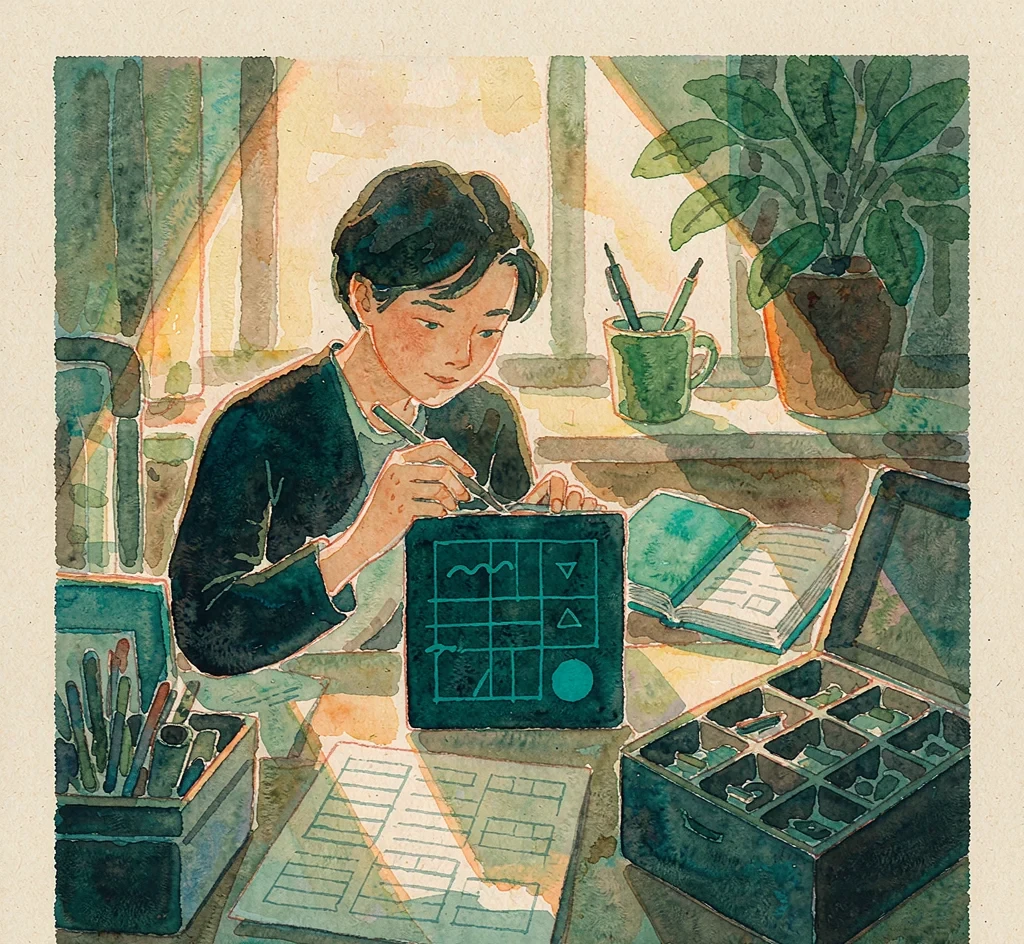
These questions ask about finishing details, organization, memory, sustained attention, listening, losing things and distraction. They are experiences to discuss in context, not a diagnosis on their own.
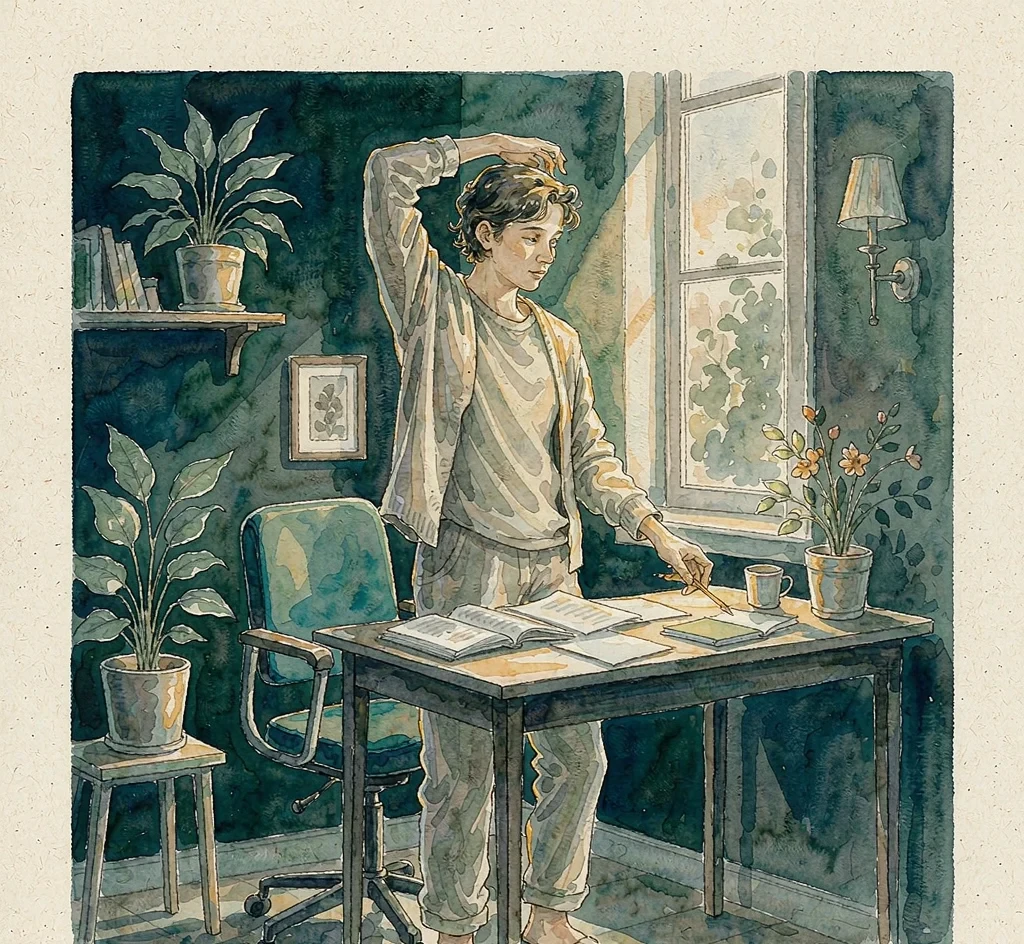
These questions ask about restlessness, fidgeting, leaving your seat, feeling driven by a motor, trouble relaxing, talking too much, finishing other people’s sentences, waiting your turn and interrupting.
Use these situations to spot recurring patterns, answer with concrete examples and prepare notes for a conversation with a professional. They are reflection prompts, not extra test items or scores.

The main challenge is over, but loose ends remain.
Think about a project where the final checks, forms or small corrections stay unfinished after the interesting work is done.
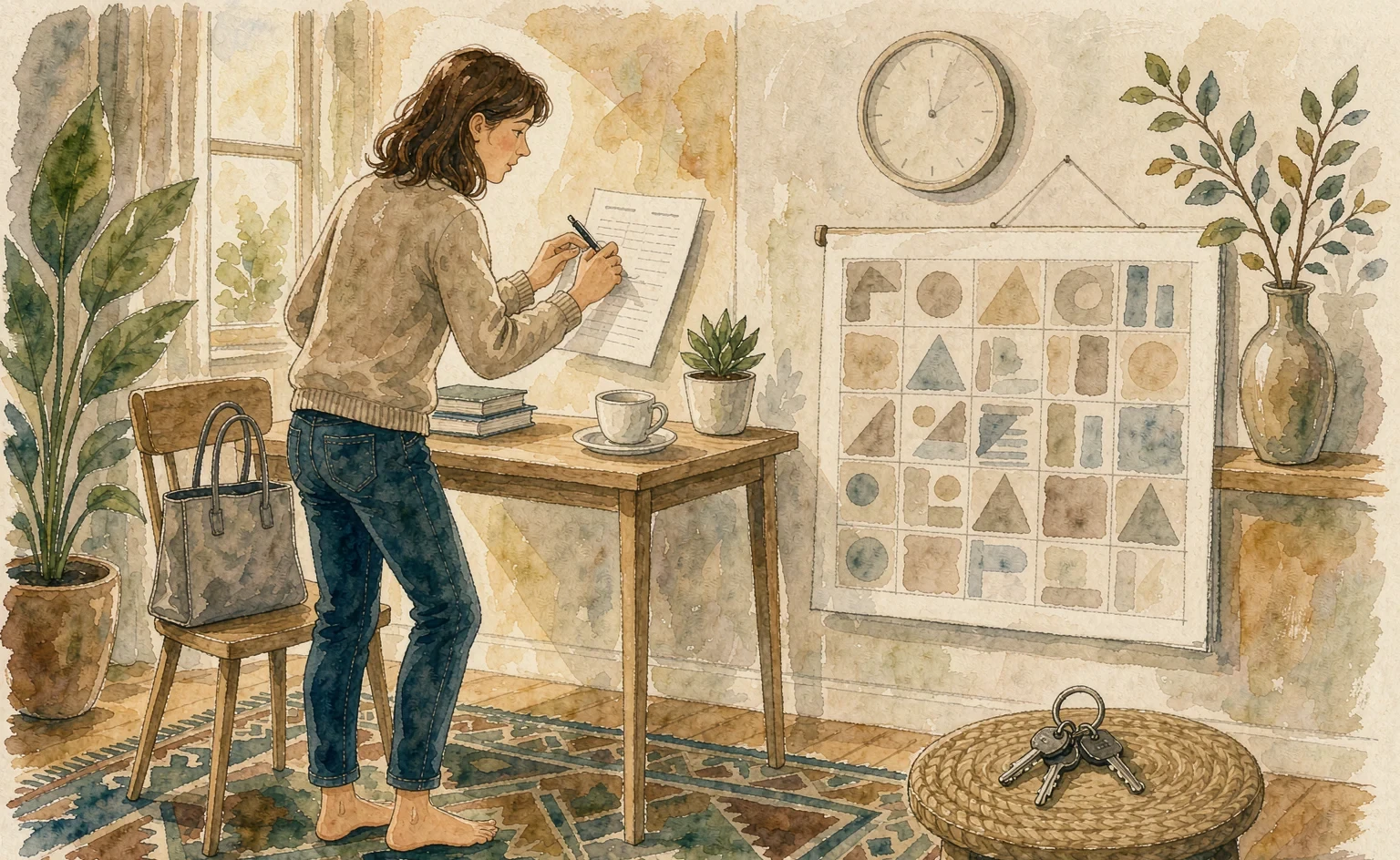
Tasks, belongings and appointments compete for attention.
Think about getting a complicated task organized, finding what you need and remembering appointments or obligations.

Attention can drift even in a direct conversation.
Do you lose track of what someone is saying, need things repeated or get distracted by activity and noise nearby?

Remaining still may feel unusually difficult.
Think about long meetings or meals. Do you fidget, leave your seat or feel driven to keep moving?

Pausing before speaking or acting can be hard.
Think about queues, group discussions and conversations. Do you interrupt, finish other people’s sentences or struggle to wait your turn?

Free time does not always feel restful.
Can you relax when you have time to yourself, or do restlessness and the urge to stay active get in the way?
This sample shows 5 of 6 positive items on the original Part A, a score of 16 out of 24 on the 2024 updated Part A, and 12 of 12 Part B questions answered.
A score of 16 falls in the 14–17 band (Likely to have ADHD). This describes a screening result, not a diagnosis. The original and updated results are not converted into each other, and Part B has no total.
Never = 0, Rarely = 1, Sometimes = 2, Often = 3 and Very Often = 4. Only Part A is scored here, using two independent methods.
For questions 1–3, Sometimes, Often or Very Often (a score of 2 or more) is positive. For questions 4–6, Often or Very Often (3 or more) is positive. Four or more positive items out of six counts as a positive screen. That suggests further professional evaluation, but it is not a diagnosis.
Add up your answers to questions 1–6 for a total from 0 to 24, then find the matching band below. This total is separate from the original positive-item count, and neither can be converted into the other. Even the highest band is not a diagnosis.
This page lists your answers to questions 7–18 and how many you completed. It does not calculate a Part B total or cutoff. A qualified professional can read all your responses alongside your history, daily impact and other possible explanations.
Keep exploring
Choose another questionnaire to explore a different part of your experience.
Learn how the two Part A methods work, what Part B adds and what an online screener cannot tell you.
Score each answer from Never = 0 to Very Often = 4. On questions 1–3, a score of 2 or higher is positive. On questions 4–6, a score of 3 or higher is positive. Four or more positive items out of six is a positive screen. It suggests a professional assessment may help, but it does not confirm ADHD.
Part A covers questions 1–6 and is the screening portion, scored by both the original and 2024 updated methods. Part B covers questions 7–18 and adds broader context. This page shows your Part B answers and how many you completed, but gives no Part B total, cutoff or diagnostic reading.
The ASRS v1.1 is a screening questionnaire, not a diagnostic test. No result, including a positive original screen or the Highly likely band, confirms ADHD. A qualified professional must consider your developmental history, current functioning, impairment and other explanations before diagnosing.
This ASRS v1.1 online test is free and needs no account. Your answers stay in your current browser tab and are not sent to a server. Download or print your summary if you want to keep it, because refreshing, restarting or closing the tab can erase your answers.
Most adults finish all 18 ASRS v1.1 questions in about 5–15 minutes. There is no timer, so you can pause to recall examples from the past six months. You can review and edit your answers before seeing your results, then download or print your summary.
ASRS v1.1 and ASRS-5 are different questionnaires. This page offers the 18-item ASRS v1.1 with its Part A scoring methods. ASRS-5 is a newer six-item screener aligned with DSM-5. Their items and scoring are not interchangeable, and this page does not produce an ASRS-5 score.
The 2024 method adds up your answers to Part A questions 1–6 for a 0–24 total, then places it in one of four bands: 0–9, 10–13, 14–17 or 18–24. It is reported separately from the original positive-item count, and the two results are never converted into each other.
Use the official source links on this page for the original WHO ASRS v1.1 questionnaire and the Harvard-hosted 2024 Part A scoring update. The summary you download here is a record of your responses. It is not an official blank form, a clinical report or a diagnostic certificate.

Explore your experiences, one question at a time.