Social scripting and imitation
Rehearsing conversations, studying other people, or borrowing expressions to make social situations more predictable.
A 24-question female autism test for traits often masked, internalized, or overlooked in women and high-masking adults.
This original educational tool is not a diagnostic test or a validated clinical scale. It helps you organize recurring experiences before deciding whether a broader assessment would be useful.
Think about recurring patterns across different settings, not only your easiest or hardest day.
Before you begin
Autism is not a different condition in women, but traits can be missed when someone scripts conversations, copies social behavior, suppresses sensory distress, or holds interests that look socially typical. A questionnaire can organize those experiences; a diagnosis requires developmental history and qualified clinical judgment.
Often overlooked
These patterns are not proof of autism. They are prompts for recalling concrete examples across childhood and adult life.

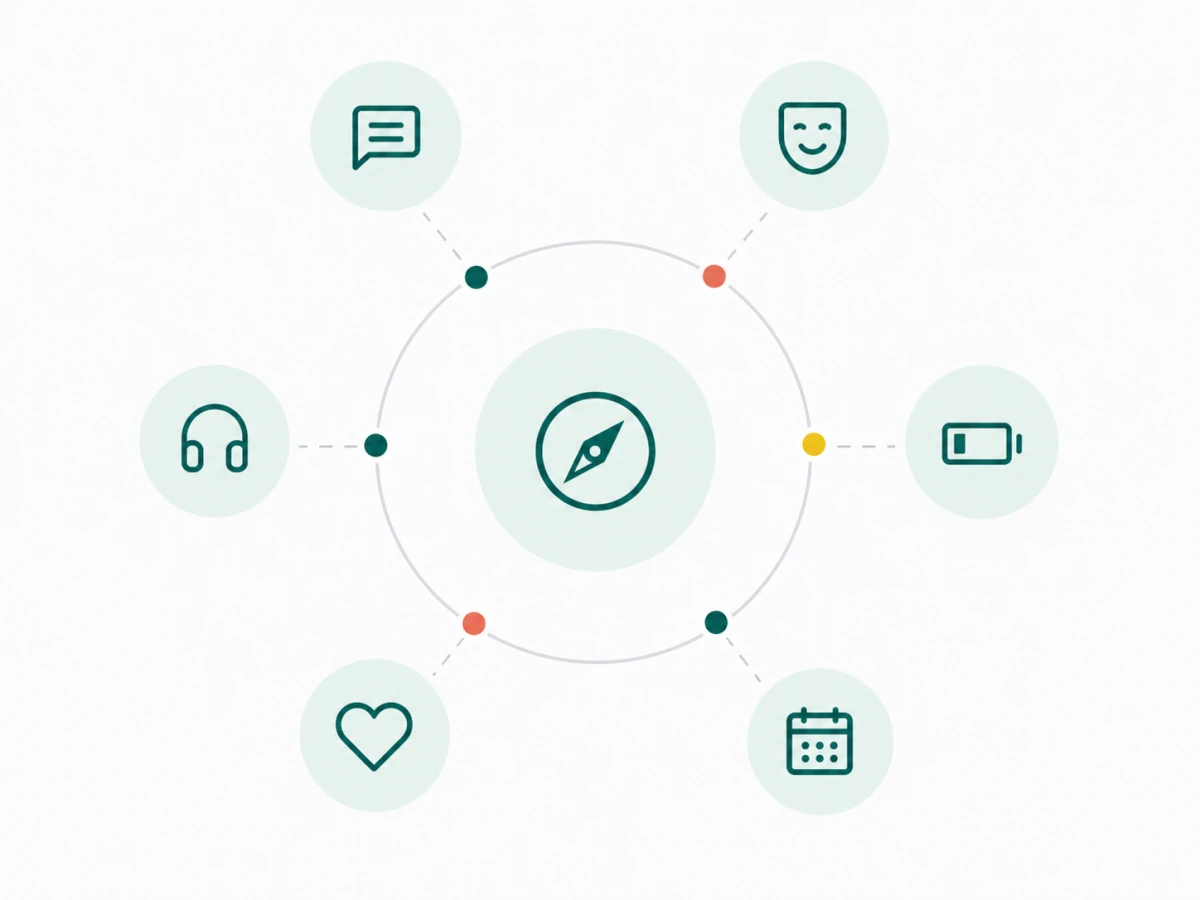
Rehearsing conversations, studying other people, or borrowing expressions to make social situations more predictable.
Managing work or social events outwardly while experiencing exhaustion, shutdown, or a strong need to be alone afterward.
Enduring noise, clothing, light, touch, or crowded spaces without others seeing how much discomfort they create.
Focused interests can center on people, stories, health, art, or other ordinary-looking subjects; intensity and function matter more than the topic.
Choose the right lens
A useful result starts with matching the questionnaire to the question you are asking. More tests do not automatically make an answer more certain.
| Scale | Best used to explore | Important limit |
|---|---|---|
| RAADS-R | Lifelong social, sensory-motor, language, and focused-interest traits in adults. | Not designed specifically for women and not diagnostic on its own. |
| CAT-Q | Camouflaging through compensation, masking, and assimilation across 25 items. | Measures masking behavior, not whether someone is autistic. |
| AQ | A shorter overview of autistic traits in adults. | Can miss context and the effort behind a socially capable presentation. |
| GQ-ASC | Subtle and internalized autistic experiences originally studied in women. | An emerging screening lens, not a stand-alone diagnostic assessment. |
Using the reflection
Many adults search for a female autism test because their visible social ability does not match the effort required behind the scenes. When answering, do not ask only whether you can make eye contact, maintain friendships, work, or study. Consider how you achieve those things, how consistently you can sustain them, and what recovery they require.
A successful conversation may still involve rehearsing, monitoring your face, copying another person, or suppressing discomfort. If you can complete an activity only by using a detailed script or spending hours recovering afterward, that effort is part of the pattern. Choose the response that reflects your internal experience rather than the impression other people receive.
Compare home, work, education, relationships, appointments, and unfamiliar environments. A trait may be less visible in a quiet or predictable setting and much stronger when plans change, sensory demands increase, or several social days occur in a row. Also consider childhood examples, even if adults described you as shy, mature, sensitive, intense, or unusually independent.
Write down what happened before, during, and after a demanding situation. Useful details include preparing phrases, forcing eye contact, tolerating painful noise, losing speech, becoming irritable, needing isolation, or struggling with ordinary tasks the next day. Specific examples are more informative than a score alone and can help you identify practical support needs.
Masking, sensory sensitivity, exhaustion, routines, and social uncertainty can occur for several reasons, including ADHD, anxiety, trauma, depression, chronic stress, and physical health conditions. An online reflection cannot determine the cause. A qualified autism assessment considers developmental history, current functioning, other possible explanations, and information from more than one source when available.

Answer 24 reflection questions
Choose how often each experience occurs across different settings, not only on your easiest or hardest day.
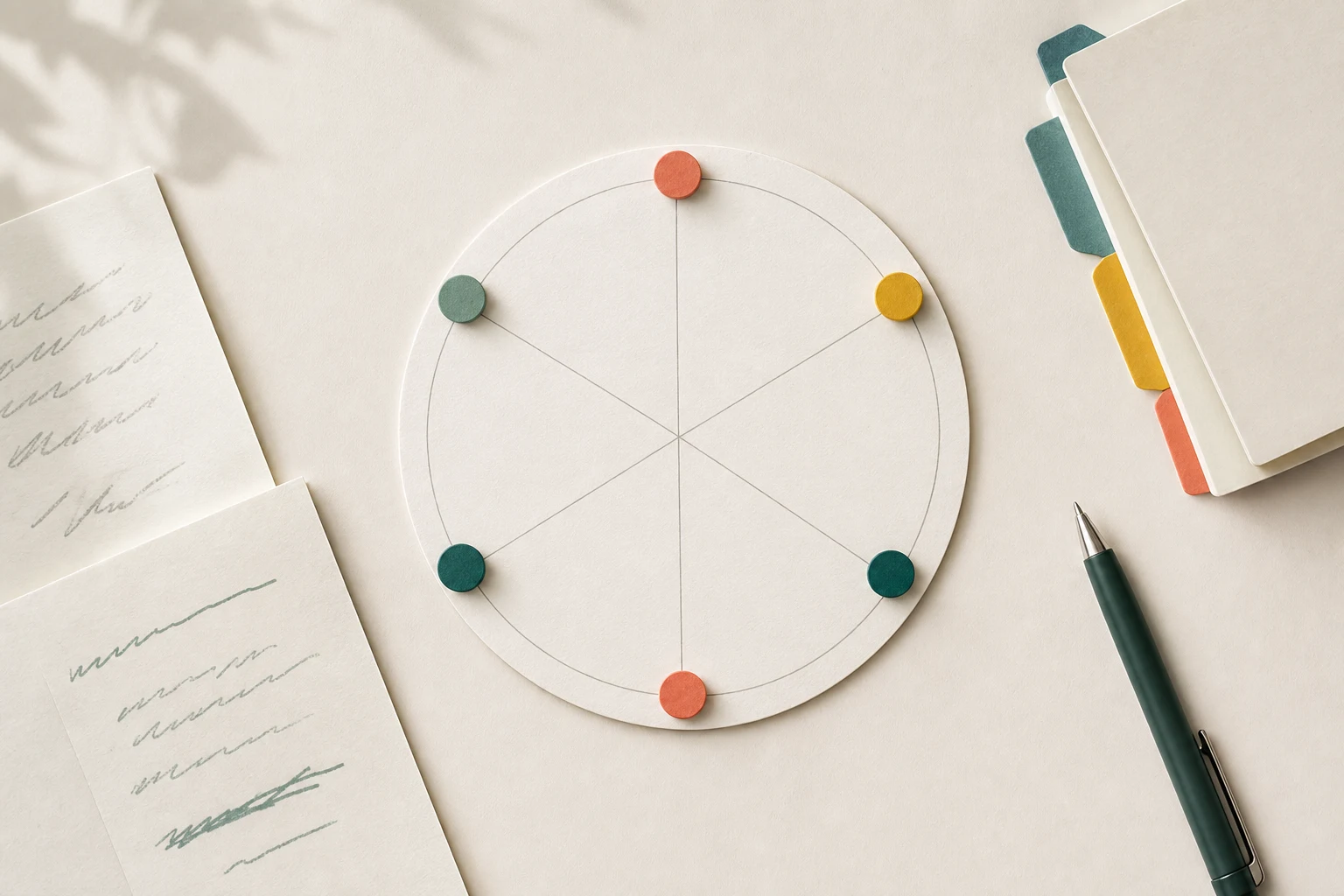
Review your six-dimension pattern
Compare social scripting, masking, sensory load, recovery, routines, and early-life experiences instead of relying on the total alone.

Choose a useful next step
Save concrete examples, adjust everyday supports, continue with the broader RAADS-R, or discuss your experiences with a qualified professional.
Your notes can be useful whether you continue self-reflection, make changes to daily routines, discuss accommodations, or seek a professional assessment. The goal is not to prove a label; it is to describe your experience accurately enough to make a helpful next decision.
After the reflection
The pattern can help you name experiences that are easy to hide from other people. It does not turn those experiences into a medical conclusion.


Compare social scripting, masking, sensory load, recovery, routines, and early-life patterns instead of treating one response as decisive.
Record what you do to cope, what it costs, what happens afterward, and whether the same pattern existed earlier in life.
You might adjust daily supports, continue self-reflection, take a broader questionnaire, or speak with a qualified professional.
Keep exploring
Choose another questionnaire to explore a different part of your experience.
Common questions
No. This is an original educational self-reflection tool organized around experiences often discussed in research on masking and overlooked adult autism. It is not the GQ-ASC, CAT-Q, or a diagnostic instrument. It has not been clinically validated and provides no diagnostic threshold or classification.
An online female autism test can organize self-reported patterns, but it cannot measure diagnostic accuracy for one person or confirm autism. Results depend on the questions, interpretation, memory, masking, current stress, and overlapping conditions. Use the pattern to guide reflection or a conversation with a qualified professional.
This reflection explores social scripting, masking, hidden sensory load, recovery after social demands, intense interests, routines, and early-life patterns. These experiences are not exclusive to autistic women and do not all need to be present. Their frequency, history, context, and effect on daily life matter more than one trait.
Masking can affect how you understand and answer items. Focus on the internal effort, learned strategies and recovery cost rather than only whether other people notice difficulty. Consider what happens before, during and after a situation, including preparation, monitoring and the time needed to recover.
Choose the CAT-Q when your main question is how much you camouflage. Choose the RAADS-R when you want a broader view of lifelong autistic traits. This reflection focuses on experiences often overlooked in women and high-masking adults. Keep the results separate because none of these tools can diagnose autism.
No. It may also be useful for trans, nonbinary and other adults whose traits have been internalized, camouflaged or missed. Use the relevance of the experiences, rather than gender identity alone, to decide whether the questions are useful. Gender cannot determine how autism presents or whether someone is autistic.
Treat a high result as a reason to gather concrete examples and consider your current support needs, not as confirmation of autism. Note when the experiences began, where they appear and what they cost you. For diagnostic clarity, speak with a qualified professional familiar with adult autism and masking.
Research basis
This page combines the original RAADS-R research with peer-reviewed work on camouflaging, late diagnosis, and more subtle presentations.

Explore your experiences, one question at a time.