
RAADS-R Test Scoring: score range, cutoff, and subscales
RAADS-R scoring turns 80 answers into a total score from 0 to 240. The test also breaks your result into four areas: social, language, sensory-motor, and focused interests. This guide shows what the score means, what it cannot tell you, and how to use it wisely.
Have not taken the test yet? Start with the RAADS R Test first, then come back here to read your score.
- 80
- statements
- 0-240
- total score
- 65+
- screening threshold
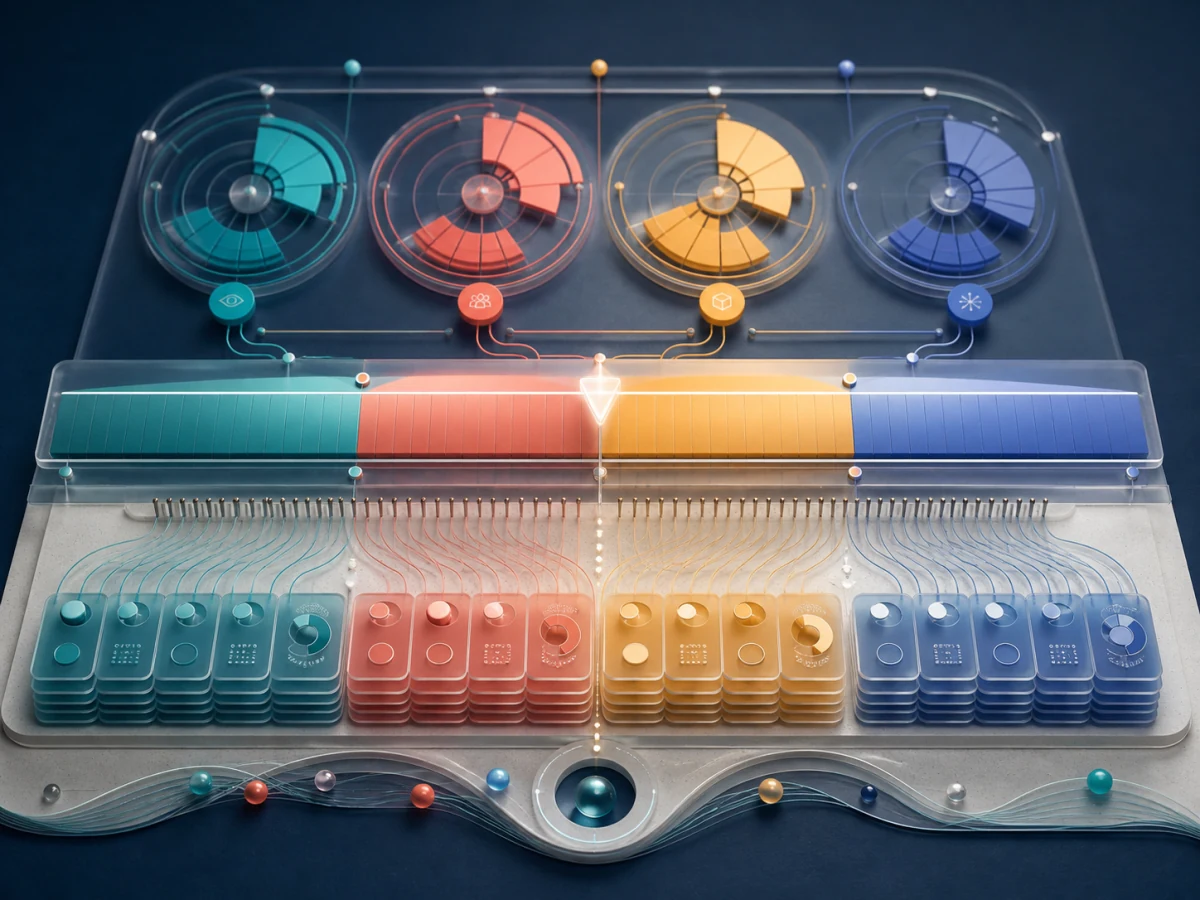
How RAADS-R test scoring works
RAADS-R stands for Ritvo Autism Asperger Diagnostic Scale-Revised. It is a screening tool for autism traits in adults. The test has 80 statements. For each one, you say if the trait is true now, was true as a child, has always been true, or has never been true.
Each answer gets 0 to 3 points. Some questions are reverse-scored, which means the points flip before the total is added up. After all 80 items, your total can range from 0 to 240. A higher score means you matched more traits on the test. But a high score alone does not prove autism.
The key cutoff is 65. In the original study, adults who scored 65 or higher often showed autism traits. But this is a screening number, not a medical verdict. Your score should be read along with your life history, current stress, masking habits, and any other conditions you may have.
RAADS-R score ranges at a glance
The 2011 validation study established one reference cutoff: 65. A 2025 third-party analysis proposed 106 and 140 by mapping RAADS-R scores to another self-report screener (AQ), not to clinical diagnoses. Because those exploratory cutoffs lack clinical criterion validation, this site does not use them as result bands.
How RAADS-R Scoring Calculation Works
A good scoring page does more than show a number. It tells you how the number was made, which parts of the test shaped it, and whether it is worth talking to a specialist. This is the safer way to read an online RAADS-R result.
- 1Answer all 80 RAADS-R statements using the four response choices.
- 2Turn each answer into a 0-3 point value. Some items are reverse-scored.
- 3Add the points to get a total from 0 to 240.
- 4Sort each question into one of four domains. Then look at the domain pattern, not just the total.

The four RAADS-R domain scores
The total score can hide what drives your result. One person may score high because of strong sensory traits. Another may score high because of social struggles. Domain scores let you see the difference. They also make it easier to explain your result to a specialist.
Social Relatedness Domain
max 117How you connect with people, read social cues, fit into groups, make friends, and handle unspoken social rules.
Language Domain
max 21Taking words too literally, unusual speech patterns, trouble with hints, and past or present communication differences.
Sensory Motor Domain
max 60Sensitivity to sound, light, clothing, food texture, and movement. Also includes body-based habits and sensory overload.
Circumscribed Interests Domain
max 42Deep focus on certain topics, love of routine, attention to detail, strong memory for interests, and upset when routines change.

What your RAADS-R score cannot do
A RAADS-R score cannot confirm or rule out autism. It also cannot tell autism apart from ADHD, anxiety, trauma, OCD, or burnout. The score is a self-report signal. It can be useful, but it needs context.
Masking is one reason context matters. Some adults have spent years hiding their needs or copying others to fit in. That can make some answers hard to pick. The reverse also happens: stress or a rough week can make traits feel stronger than usual. A fair score reading leaves room for both.
If your score feels important, save it. Note which questions felt hard to answer. Then bring the result to a psychologist or autism service. The goal is not to fight the number. The goal is to use it as a starting point for a deeper talk.
What to do after scoring the RAADS-R
What you do next depends on why you took the test. If you were just curious, domain scores may help you understand yourself better. If you struggle at work, in relationships, or with sensory overload, the score can help you describe patterns. If you want a formal answer, use this score as one piece of a larger assessment. Need a fresh score? Start with the RAADS R Test on the homepage, then come back here.
Save the score
Keep your total, domain scores, and date. Add notes about answers that felt unclear.
Look for patterns
Compare your score with childhood memories, sensory needs, and masking habits.
Choose a next step
Retake later, read the score chart, or talk to a qualified specialist.
RAADS-R scoring FAQ
What RAADS-R score suggests autistic traits?
The original study uses 65 as the cutoff. Adults who scored 65 or higher often showed autism traits. But this is a screening number, not a diagnosis.
Is a RAADS-R score enough for an autism diagnosis?
No. RAADS-R helps with self-reflection and talks with specialists. But a real diagnosis needs life history, interviews, observation, and expert judgment.
Why do domain scores matter?
Two people can get the same total score for different reasons. Domain scores show if the pattern comes more from social, language, sensory, or interest-related traits.
Can ADHD, anxiety, or masking affect RAADS-R scoring?
Yes. Other conditions and years of masking can change how you answer. That is why you should read the score with full context.

Ready to calculate your own RAADS-R score?
Take the test in private. Review your total and domain scores. Then come back here when you want to read the result more carefully.
Sources and clinical context
This page sums up RAADS-R scoring for learning and self-reflection. It draws from the original study by Ritvo and team, plus later work on the four-domain structure. It does not replace medical advice or a formal assessment.