


What this autistic burnout test explores
Ordinary activities may take more effort even when you still finish them. This free autistic burnout test helps you notice changes in energy, sensory comfort and everyday capacity.
Answer 18 original questions about the past two weeks compared with your usual self. Your result summarizes recent changes; it does not identify their cause.
Autistic-led research describes sustained exhaustion, reduced access to familiar skills and lower tolerance for stimulation. These themes provide background for this reflection. Read the 2020 research
Who might find this reflection useful?
Adults who are autistic or exploring their experiences can use the prompts before a support conversation or after a demanding period. No diagnosis, account or email is required.
Six areas to reflect on
The six areas organize your reflections. They are descriptive groups, not validated clinical subscales.
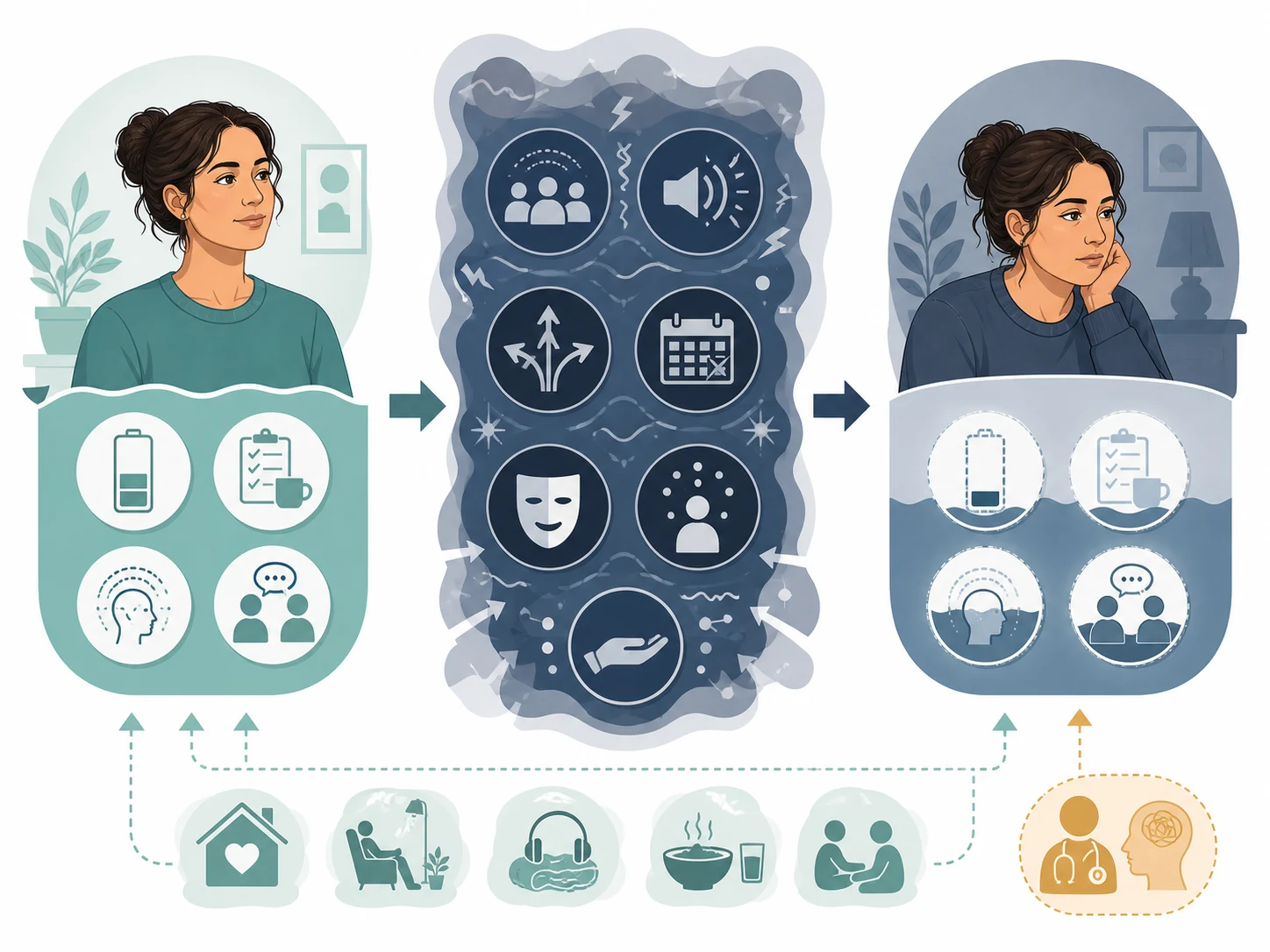
Energy & recovery time
Recovery after ordinary days, restarting after rest and needing to shorten activities.
Sensory comfort
Comfort around familiar sounds, lighting and busy places, including settling afterward.
Thinking & task switching
Planning tasks, making familiar decisions and returning after interruptions.
Communication & social effort
The effort conversations, explaining needs and meeting social expectations require.
Everyday capacity
Keeping up with responsibilities and fitting essential tasks into your available energy.
Rest & sustainable pace
Restorative downtime, room for breaks and a pace you can sustain.
How to take the autistic burnout test
- Choose your baseline: compare the past two weeks with what is usual for you.
- Answer all 18 questions: select the increase from 0 to 4 and revisit any answer before finishing.
- View your free 0–72 total: read the limits and note one change to discuss. A detailed $4.90 report is optional.
How to answer: use your own usual baseline
Compare with your usual routine, rather than your best day or someone else’s capacity. If your baseline is unclear, choose the closest answer and keep that uncertainty in mind.
“No increase” includes difficulties that stayed the same or eased. A long-standing difficulty can still matter even when it has not increased.

Autistic burnout test results: read the score in context
Answers score 0–4 points, giving a total of 0–72. Each three-question area ranges from 0 to 12. Higher scores reflect more reported increase across these prompts.
The 36-point reference equals an average of 2 points per answer (“Moderately”). It is a scoring reference, not a research cutoff. This original questionnaire has no validated severity bands; a low score cannot rule out difficulties.
Burnout quiz vs ABM, CAT-Q and autism trait tests
Choose a tool that matches your question. Our original reflection is separate from the official AASPIRE Autistic Burnout Measure.
| Tool | What it focuses on | How to use the result |
|---|---|---|
| This burnout reflection | Changes in everyday effort and recovery over two weeks. | Describes recent changes; has no validated cutoff. |
| AASPIRE Autistic Burnout Measure | Research instruments with version-specific questions and scoring. | Follow the official toolkit for that version. |
| CAT-Q masking test | Compensation, masking and assimilation in social situations. | Explores camouflaging; does not determine burnout. |
| AQ-50 and RAADS-R | Self-reported autistic traits. | Keep trait screening separate from recent capacity changes. |
Burnout, depression and tiredness can overlap
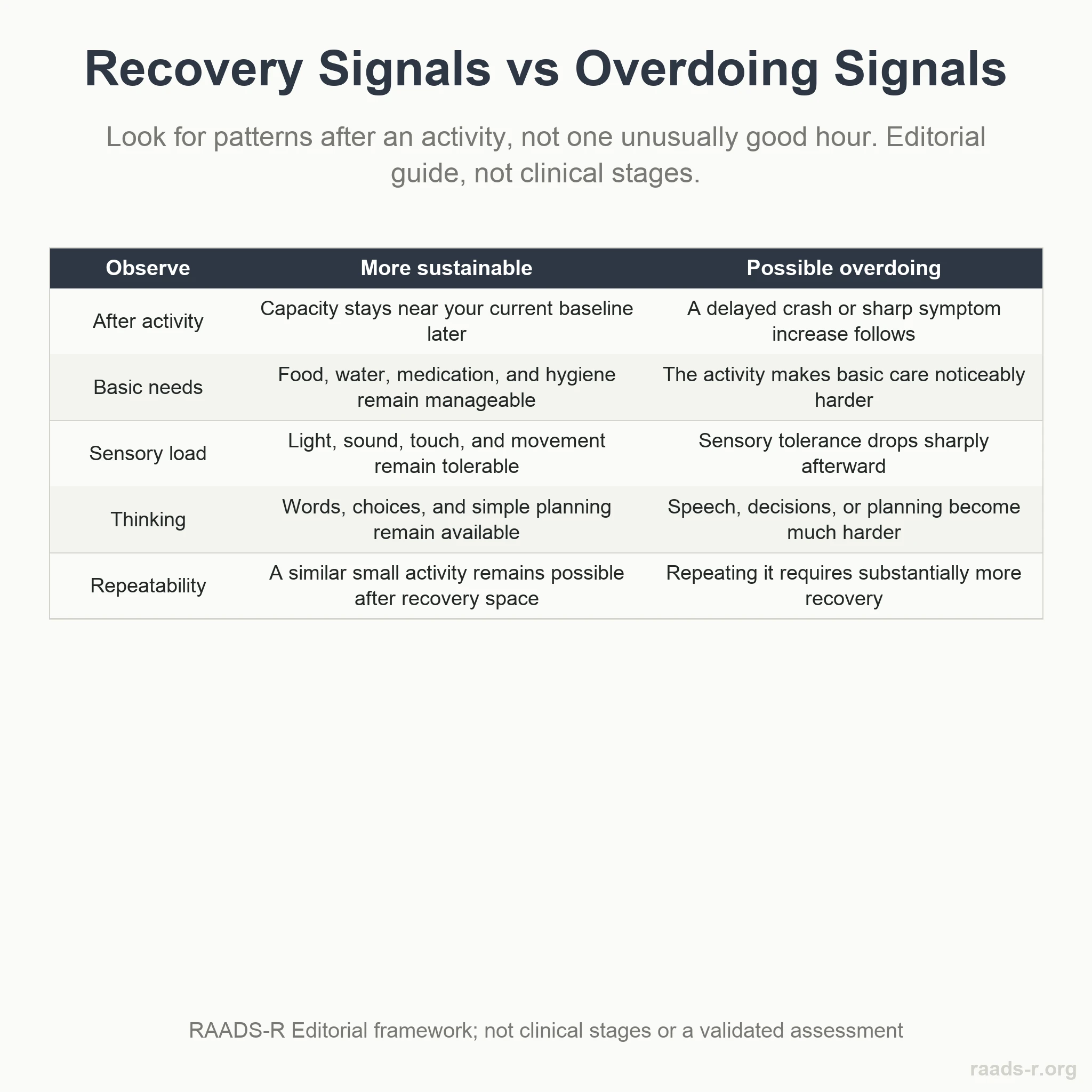
This quiz cannot distinguish autistic burnout from depression, sleep problems or illness. Several factors may contribute together. Bring examples of what changed and when it began to a support conversation.
How can I use my result to ask for support?
Choose one manageable observation or request. You do not need a complete plan to use your result.
Record one change and its cost
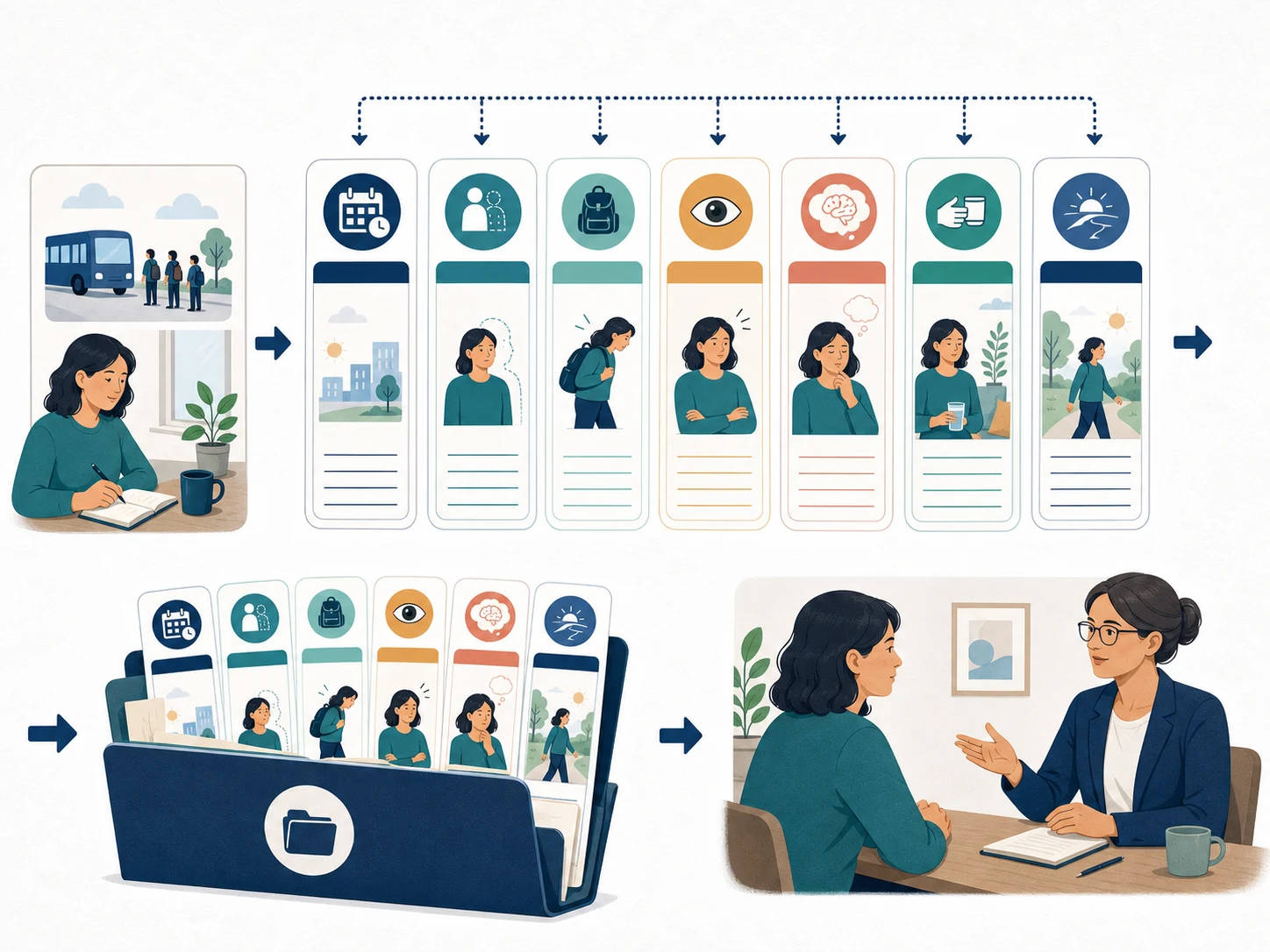
Note what was usual, what happens now and the recovery time. For example: “After a meeting, I now postpone cooking.”
Identify one practical support request
Discuss a quieter setting, written instructions, fewer interruptions or help with an errand. Choose something that fits your circumstances.
Bring the pattern to a support conversation
Share the impact on daily life with a trusted person or professional. If repeating the test, keep the same timeframe and baseline.
Seek appropriate professional support for persistent, worsening or disruptive changes, regardless of your score.
Keep exploring
Explore other tests
Choose another questionnaire to explore a different part of your experience.






Autistic burnout test: common questions
Is this the official Autistic Burnout Measure (ABM)?
No. This is an original, unvalidated 18-question reflection, not the Autistic Burnout Measure. For official ABM instruments and scoring, consult the AASPIRE measurement toolkit. The questions here compare recent changes with your own usual baseline and do not produce a validated clinical classification.
Can I take this test without a diagnosis, and can it diagnose burnout?
You can take this reflection without an autism diagnosis. It can organize observations about recent changes in energy, sensory comfort and everyday capacity, but it cannot confirm or rule out autism or autistic burnout. Consider the result alongside your history, current demands and other possible explanations.
Is the autistic burnout test free, and what costs $4.90?
All 18 questions and the basic 0–72 score are available without payment. The optional $4.90 one-time report adds AI-generated analysis, explanations across six descriptive areas, your complete answers and practical next steps. Buying the report is not required to finish the reflection or view the basic score.
What happens to my answers?
Your free progress stays in this browser tab until you close or refresh it. If you unlock a report, your answers are saved so the private report can be reopened. Sending them to the disclosed AI provider requires a separate choice after payment. Keep the resulting report link private.
Does a low score or a lower repeat score mean I am well?
No. The questions focus on recent increases compared with your own usual baseline, so long-standing difficulties may produce little change. A lower repeat score can reflect different demands, timing, interpretation or circumstances and does not by itself prove recovery. Review concrete changes in daily capacity and support needs too.
Can this quiz distinguish autistic burnout from depression or tiredness?
No. Autistic burnout, depression, sleep problems, physical illness, medication effects and ordinary tiredness can overlap in how they feel. Record when the changes began, what makes them better or worse and how they affect daily life. Discuss persistent, severe or worsening difficulties with an appropriate professional.
How do I know if I have autistic burnout?
Sustained exhaustion, reduced access to familiar skills and lower sensory tolerance are observations often discussed in relation to autistic burnout. They do not establish a diagnosis or identify one cause. Compare the changes with your usual capacity, note their duration and impact, and consider other explanations with a professional.
Is there an autistic burnout test PDF?
The basic result can be printed from your browser, and an optional purchased report can also be printed or saved as a PDF. The report includes your answers and educational analysis. It is not an official Autistic Burnout Measure questionnaire, a validated scoring form or a diagnostic document.
